
Assigned Resources (M5)

READ:
Menon, N. 2015. “Is Feminism about ‘Women’? A Critical View on Intersectionality from India” (access on eclass)
BIO
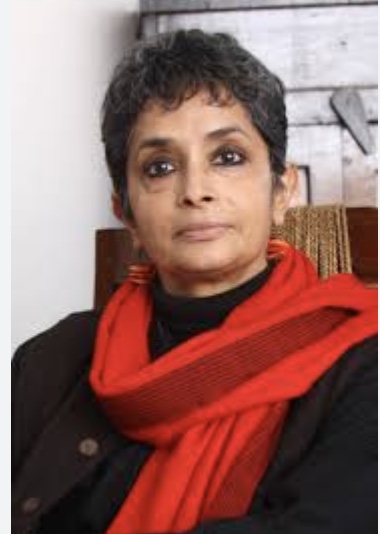
Nivedita Menon is a political theorist and feminist scholar who is appointed as a Professor at Jawaharlal Nehru University (JNU), India. Her work centers around questions of feminism, culture, and politics in India. In the article “A Critical View on Intersectionality”, Menon offers a critique of universalizing intersectionality.
Before you start reading:
Survey the text (title, subheadings). Read the introduction carefully to get a sense of the argument, note, or map the structure and organization of the article.
Menon challenges the ways intersectionality has been imposed and embraced in the Indian context. She begins from the deconstructive premise that “women” are neither a ‘stable’ nor ‘homogenous’ category. Most intersectionality literature would agree with that, since intersectionality is concerned with intracategorical differences between women and among other groups.
However, Menon goes further, reminding us that “gender” discourses produce “women” and “men” – in specific spatial and temporal contexts and ways (37). If categories like gender – but also race, caste, class etc. are not universal, stable, nor homogenous categories but are geographically and historically specific, what problems arise when Western categories ‘travel’ globally? And, what problem might arise when intersectionality, a social justice framework developed in the West reliant on identity categories, is embraced by international funding agencies structuring scholarship and aid work in the Global South?
While you read:
- Explain her term “imperialism of categories” (36)
- Explain why the single-axis framework, which intersectionality seeks to interrupt, was never the dominant one in India. What role do caste, religious community, and nation have played here? (38)
- Explain Menon’s concern over how laws determine and regulate identities (41), or the “regulatory production of identities” (Grabham cited in Menon, 41). She is also concerned with how speedily international funding agencies have adopted an intersectional approach: “The term intersectionality seems to work not for feminism, but for states and international funding agencies” (44, original emphasis). What are her concerns?
- Read the conclusions (44) carefully and describe Menon’s position towards intersectionality in your own words.
WATCH:

Lecture by Dr. Sabujkoli Bandopadhyay (23:00 min)
Watch

Dr. Mary John on Intersectionality (2016) (6:56 min)
Bio
Dr. John is a feminist scholar and academic specializing in the field of Women’s and Gender Studies. She was the Director at the Centre for Women’s Development Studies, New Delhi, India, and has served as Faculty at Jawaharlal Nehru University and Ashoka University, both in Delhi.
In this video Mary John, is disagreeing with Menon, to argue that intersectionality is indeed useful in the Indian context.
- How does John challenge the common misconception of “double” or “triple oppression”?
- In what specific ways does John consider intersectionality useful in the Indian context?
- How does her view differ from Menon’s?
READ:
(Grad students/ Optional for Undergraduates) (access on eclass)
John, M (2015) “Intersectionality: Rejection or Critical Dialogue
Mary John’s (2015) is a direct response to Nivedita Menon’s piece that you already studied.
While you read, pay attention to:
- How does John consider intersectionality useful for the Indian context?
- How does John support her argument for intersectionality?
Watch
“The Discreet Charm of the Savarnas” (dir. Rajesh Rajamani, 2020) (21:56 mins)
The film’s Director Rajesh Rajamani is an established film critic who has previously written on problems of Savarna (people from the four castes of Hinduism) dominance on the Indian film industries
This film centres around the question of “who looks like a Dalit” and demonstrates how upper-caste presumptions of Dalit individuals continue to reproduce reductive ideas of Dalit identity.
This satirical film is aimed at exposing the privilege of the upper-caste (or any savarna) members of the film industry and general public. It demonstrates how the privileged citizens are “educated” in US American anti-racist and feminist scholarship but fail to see the connection with the conditions of caste-baste oppression in India.
REFLECT:
How do you understand the title of the film “The Discreet Charm of the Savarnas”?
What kind of intersectional oppression is identified in the film?
What types of power relations emerge in this video? Think about how we can benefit from an intersectional framework to understand the power dynamics projected in the film.
The film shows the three Savarna (upper caste) directors in India reading renowned works like Beloved by esteemed African American author Toni Morrison. They talk about influential US Anti-racist theorists like James Baldwin and Ta-Nehisi Coates. How has this education impacted their thinking about oppressive structures (as we see in the film) in their own communities? What does it tell us about the limitations of borrowing and implementing American theories and concepts in the Global South?
As we see, ultimately, the directors decide to shoot the film a (non-Dalit) Savarna person playing the role of a Dalit member. What kind of ethical problems does the film ask us to consider here?



 UNIVERSITY OF ALBERTA WGS 498/GSJ 598