
Assigned Resources (M7)

READ:
Terran Giacomini (2016). Ecofeminism and system change: Women on the frontlines of the struggle against fossil capitalism and for the solar commons.
BIO

Terran Giacomini is a settler and an activist scholar who is a member of National Farmers Union in Canada and La Via Campesina and a founding member of the Relational Accountability for Indigenous Rematriation (RAIR) Collective. Dr. Giacomini completed her PhD from the University of Toronto, and her published work focuses on ecofeminism, food studies, activism, grassroot organizing against resource extraction, and the idea of the common.
“When all dispossessed men and white women fight together with racialized women at the bottom of the capitalist hierarchy, capitalist divisions are challenged, leaving room for these groups to establish horizontal relations.” (Giacomini, 2015, p. 96)
In this article, the author uses two community organizations and investigate their organizing structure as examples. The organizations are:
- WECAN – Women’s Earth and Climate Action Network and
- La Via Campesina (International Peasant Movement).
These transnational social movements have emerged from solidarity networks of grassroots community organizations that organized together to demand improved resource provision for their communities. Often, these community organizations adapted further transformative approaches that changed their community’s internal and external structure to secure better resources.
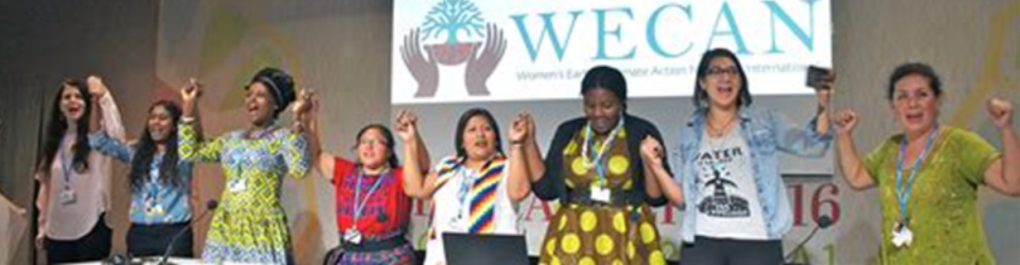
Photograph: Women leaders rise during a WECAN formal UN Side Event held during COP22. (copied from the homepage of WECAN https://www.wecaninternational.org/)
WECAN’s mandate is described in the following way on the organization’s webpage:
In the face of the escalating climate crisis, and the devastating impacts of environmental and social degradation on the Earth and our diverse communities – the voices, actions, solutions, and leadership of global women on the frontlines of climate change must be recognized. Women are disproportionately impacted by the climate crisis, yet are simultaneously vital leaders in local and global solutions. The Women’s Earth and Climate Action Network (WECAN) International engages women and feminists across the gender spectrum worldwide in policy advocacy, on-the-ground projects, direct action, trainings, and movement building for global climate justice.
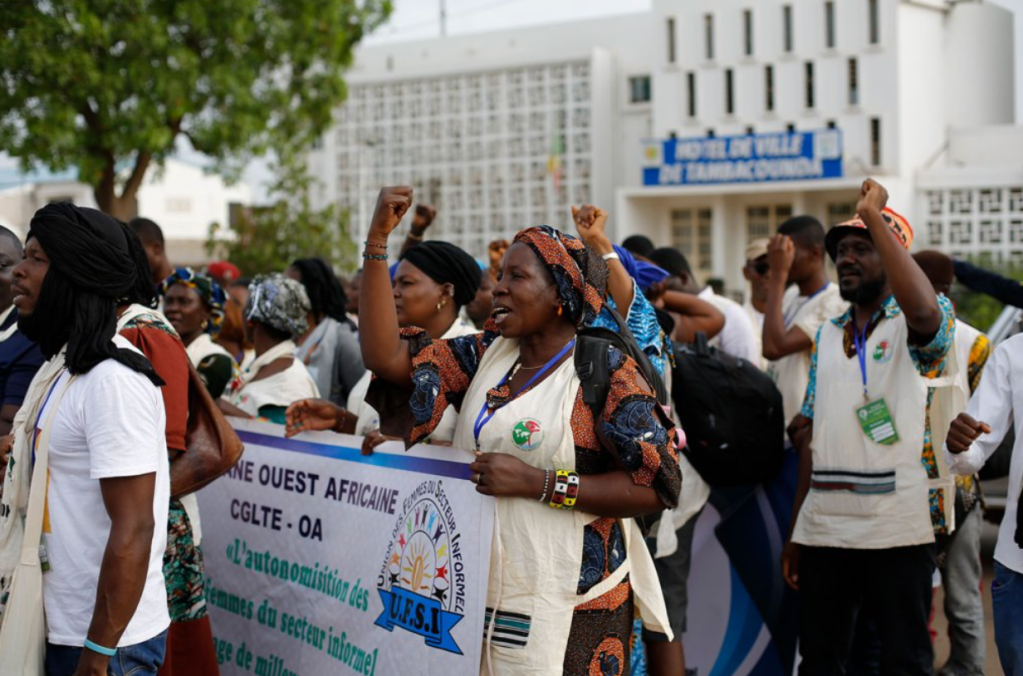
World Bank 2024 Land Conference in Washington DC (https://viacampesina.org/en/world-bank-out-of-land-80-organizations-denounce-world-banks-2024-land-conference/)
La Via Campesina is a transnational solidarity movement that offers a platform to various grassroots-level peasant organizations to support each other in their fight for food sovereignty, environmental justice, agroecology, peasant rights, dignity for migrant workers, and access to land and water. The many community organizations affiliated with this movement are collectively fighting against transnational agribusiness, capitalism, and patriarchy.
To understand Giacomini’s article and its reliance on the concept of the commons and “commoning”, you might find watching this video helpful.
Watch

What are the Commons?
The article uses two examples of women organizing collectively in the face of the food-fuel-climate crisis: WECAN, which campaigns against fossil fuel extraction, and La Vía Campesina, a global movement for food and seed sovereignty.
Read the following passage and discuss how commons and defending commons matter. How can an intersectional paradigm help to develop better practices of activism towards creating and defending these “commons”?:
“[W]omen are at the forefront of the defense of the commons. … Commoning is defined here as class struggle for collective control over … social wealth, access that is not mediated by competitive market relations ….Subsistence production—caring for nature including families by, centrally, securing household food, water, fuel, medical and other needs—requires direct access to the material commons and a context of peaceful community relations. Subsistence production is overwhelmingly women’s social responsibility. … historically and in our time, women more than men depend on access to communal resources, and have been most committed to their defense.” (Giacomini 2016, 95)
The article does not mention intersectionality as such, do you think the movements discussed represent intersectional activism? How or how not? Keep in mind the questions we posed at the beginning of this module:
- who is organizing the community and working as decision-makers of community practice?
- what kind of power relations emerge between the leadership and the other organization members?
- what are the aims of this organizing action? Are they looking for more resources or are they looking for radical and transformative change?
READ:
Raman, K. R. (2020). “Can the Dalit woman speak? How ‘intersectionality’ helps advance postcolonial organization studies”. Organization, 27(2), 272-290. https://doi.org/10.1177/1350508419888899
(Access on eclass)
BIO
K Ravi Raman is a political economist who currently serves as a Member of the State Planning Board of Kerala (a province in India). Raman’s scholarly work includes Global Capital and Peripheral Labour (Routledge, 2010/2012/2015, 2023), Development, Democracy and the State (Routledge, 2010) and Corporate Social Responsibility (with Ronnie Lipschutz) (Palgrave Macmillan, 2010).

Watch (22:02 mins)
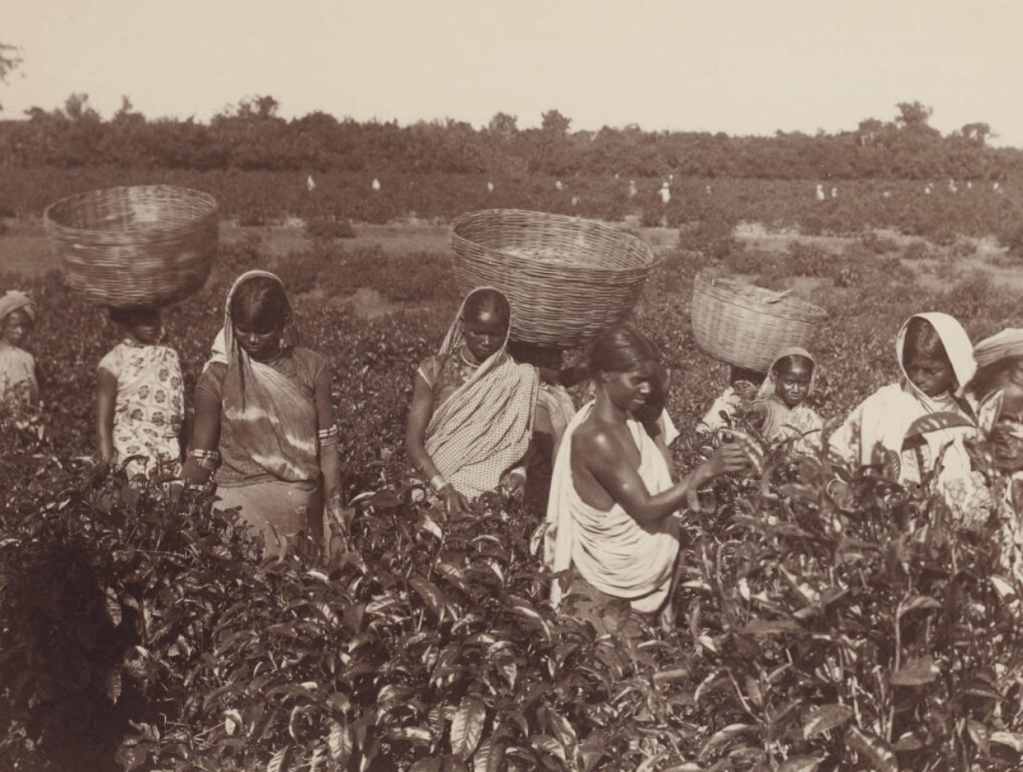
Watch the video for a better understanding of the conditions of tea planters.
REFLECT:
What insights about the living conditions of tea plantation workers have you gained?
READ:
Raman, K. R. (2020). “Can the Dalit woman speak? How ‘intersectionality’ helps advance postcolonial organization studies”
Before you start reading:
Scan the chapter. Take note of the title and section headings
Focus on the following quotation:
“oppression operates through a series of interlocking systems of production and power relations that cut across identity categories …. However, we cannot treat all oppressions and resistance with equal importance as they vary in terms of caste, gender, everyday livelihood and social reproduction of labour. Oppression experienced by caste Hindu woman is not the same as faced by a Dalit woman, as the latter has been historically oppressed, since facing multiple ‘layers of oppression’” (Raman, 274)
Based on our readings in the module on “Globalizing Intersectionality” how do you think researchers can use intersectionality in this context of Dalit women who work as plantation workers in the tea plantations of India?
Read the section:
“Labour process and social reproduction of labour power: Dalit women and Kerala’s tea plantations” (pages 276-278) and identify the various forces that are responsible for creating the interlocking systems of oppression that Dalit women workers face in their daily life.
Raman writes:
“I would reiterate that on the spot ethnography helps contribute to the understanding of diagnostic events such as the Munnar revolt by the Dalit women who challenged the multiple hierarchies embedded in patriarchal forms. I was able to interact directly with the women involved in the struggle in their own location, occasionally exchanging ideas as a critical participant observer, as Spivak (1988) insists in the larger context of postcolonial epistemology that ‘the task of an intellectual is to pave way for the subaltern groups and let them freely speak for themselves’ (pp. 271–313). While traditional ethnography makes the ethnographer’s presence a familiar sight for the research participant, ‘on-the-spot ethnography’ further strengthens the communication and exchange of ideas between the two, as the latter participates first-hand in the processes of struggle, however much limited the participation may be. (Manan 276).
REFLECT:
Based on your understanding of the research conducted here (to understand Dalit women’s activism), do you think on-the-spot-ethnography (as Raman calls it) can avoid the pitfalls associated with implementing intersectionality (as discussed in Nivedita Menon’s article in the “Globalizing Intersectionality” module) when researching grassroot-level activism in the global south? Explain your position.

 UNIVERSITY OF ALBERTA WGS 498/GSJ 598